Cementing the “1921 borders” consolidates Azerbaijan’s geostrategic position—one it has steadily built up over the post-Soviet decades. For Armenia, the definitive renunciation of irredentism opens the prospect of developing economic and political ties with its Turkic neighbours. While offering new opportunities for national development, it also carries the risk of inducing overdependence, writes Valdai Discussion Club Programme Director Anton Bespalov.
On August 8, 2025, Armenia and Azerbaijan initialled a landmark peace accord in Washington. Though ratification is still to come, the agreement signals a historic turn in relations between two long-time adversaries. Its cornerstone is the mutual renunciation of territorial claims and a pledge to respect each other’s territorial integrity.
Historically, this signifies both states’ definitive recognition of the border drawn between Soviet Armenia and Soviet Azerbaijan on the basis of decisions taken in 1921. This draws a line under a turbulent era of ethnonational projects that began with the collapse of the Russian Empire—a border that left many dissatisfied on both sides. Yet it is precisely this boundary that has re-emerged as the undisputed reference point for modern-day Armenia and Azerbaijan.
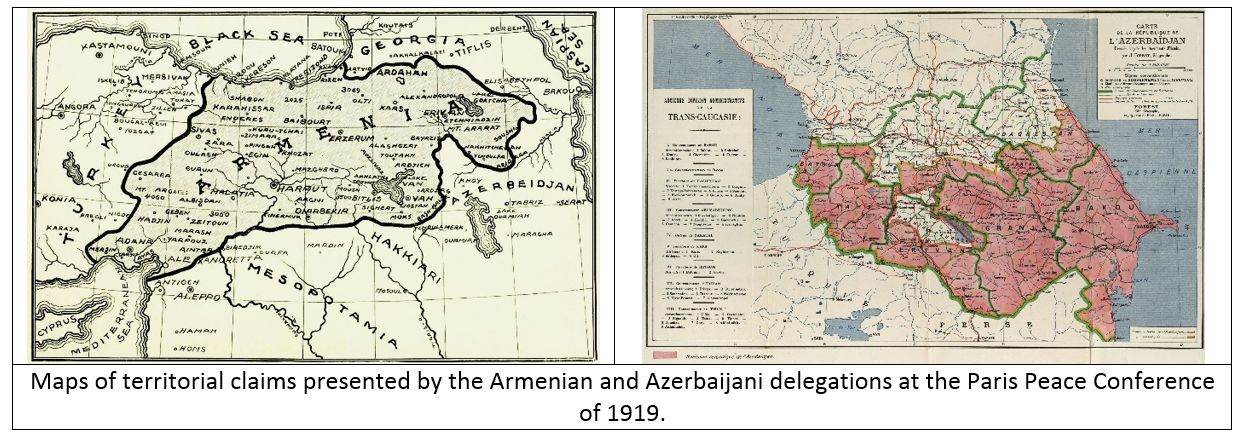
While one can accept the latter thesis—though forced Russification may well have been counterproductive, stimulating rather than suppressing national consciousness—the absence of consolidated Armenian and Azerbaijani national territories in the early 20th century was far more a function of geographic and socioeconomic realities than of imperial policy. Ethno-confessional groups in what is now Armenia and Azerbaijan were distributed in a “ribbon” pattern dictated by terrain (a point vividly illustrated by late 19th-century maps of religious and ethnic composition in four Transcaucasian provinces of the Russian Empire, compiled by geographer Renat Temirgaleev). Under such conditions, the attempt to forge nation-states, set against a backdrop of deep-seated ethno-confessional tensions, was almost certain to generate conflict—and indeed it did, erupting in interethnic violence in 1905–07 and escalating into full-scale wars and ethnic cleansing in 1918–20.
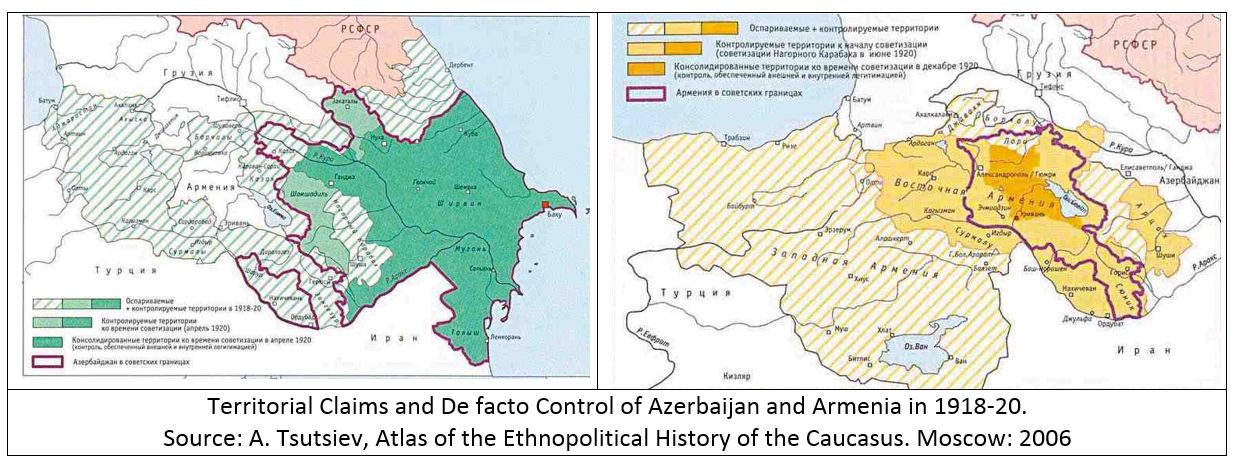
The territories claimed by the Armenian and Azerbaijani national movements not only partially overlapped—a common phenomenon during the post-World War I imperial collapse—but were fundamentally incompatible.
The Sovietization of Azerbaijan and Armenia brought peace and, with it, the establishment of a mutually-recognized border. The demarcation, carried out in 1921–22 and refined in subsequent years (sometimes without prior agreement), was accompanied by numerous disputes between the “Reds” in Baku and Yerevan. Notably, the borders drawn by the Soviet authorities largely reflected the pre-existing realities on the ground. The fate of three contested regions—Nakhichevan, Zangezur, and Karabakh—was resolved through compromises imposed by Moscow. Nakhichevan, where a Soviet republic was proclaimed in July 1920, held a referendum in early 1921 and voted to join Azerbaijan as an autonomous region. By the summer of 1921, Zangezur was recognized as part of Armenia, and Nagorno-Karabakh, with its predominantly Armenian population, became an autonomous oblast within Azerbaijan.
A distinctive feature of the national-territorial demarcation in this part of the nascent USSR was the involvement of an external actor. Under agreements with Turkey, two autonomous Soviet republics emerged: Adjara within Georgia (the only autonomous entity created on a religious basis, for Muslim Georgians) and Nakhichevan within Azerbaijan. The 1921 Moscow Treaty explicitly stipulated that Nakhichevan “shall form an autonomous territory under the protectorate of Azerbaijan, provided that Azerbaijan does not cede this protectorate to a third state.”
As the final years of the Soviet Union would reveal, the configuration devised in the early 1920s did not resolve the Armenian-Azerbaijani conflict. Contained for decades within a centralized state but never extinguished, it erupted into armed confrontation accompanied by ethnic cleansing. That was followed by nearly thirty years of “frozen conflict” over Karabakh, which was resolved militarily in 2020–2023. Last year’s Washington agreement formalized both sides’ acceptance of the century-old Soviet borders—but within a radically altered regional demographic landscape.
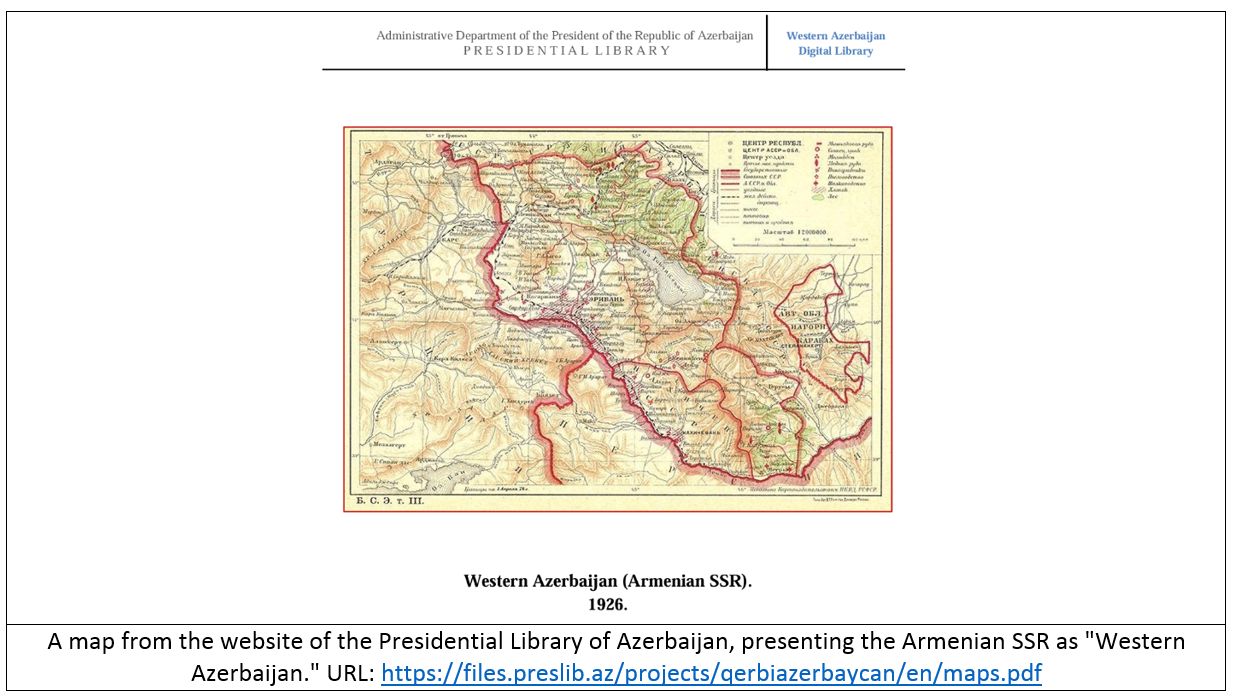
For Azerbaijan, reaching the “1921 borders” and dismantling Armenian Karabakh constituted a moment of national triumph. Yet official Baku continues to frame these borders as unjust, even claiming historical territories beyond them. The narrative of “Western Azerbaijan”—a territorial claim encompassing the entirety of Armenia—is being actively promoted, and the rhetoric of “returning to Western Azerbaijan” receives increasing media attention. Irredentist claims, particularly regarding Armenia’s Syunik region—through which the Trump Route for International Peace and Prosperity (TRIPP) is planned to run—cannot be ruled out.
It is worth noting that this transport corridor, while improving connectivity between the Nakhchivan Autonomous Republic and mainland Azerbaijan, is not of critical importance to Baku. The exclave’s isolation was mitigated in the early post-Soviet years, not least thanks to the eight-kilometre border with Turkey—also a legacy of 1921—and cross-border trade with Iran. TRIPP would enhance logistics along the Middle Corridor linking Turkey to Central Asia, but it would hardly represent a breakthrough. The Baku-Tbilisi-Kars railway, which connects Azerbaijan with Turkey and Europe while bypassing Armenia, has been operational since 2017 and, to put it mildly, operates below capacity. The possible restoration of the Horadiz-Julfa railway could create an additional route for the North-South International Transport Corridor, but its integration with the proposed Zangezur route—hinted at by Ilham Aliyev—would most likely occur only after the completion of the Astara-Rasht line in Iran. Azerbaijan, already enjoying economic and military superiority over Armenia, also possesses all the necessary transport and logistics advantages, positioning itself as an indispensable partner for Russia, Iran, the West, and Central Asia simultaneously. Cementing the “1921 borders” only reinforces the geostrategic position it has consolidated over the post-Soviet decades.
For Armenia, the definitive abandonment of irredentism opens the way to building economic and political relations with its Turkic neighbours. This offers new developmental opportunities but also entails the risk of overdependence—particularly in the realm of transport corridors. The current Armenian authorities appear intent on mitigating these risks by deepening ties with the European Union. Yet the experience of neighbouring Georgia, which embarked on the path of European integration more than two decades ago (not to mention Turkey), suggests that expectations of the EU often diverge markedly from reality.
Throughout the post-Soviet period, Armenia’s most important strategic assets have been its close relations with Russia and Iran (in the latter case, the shared border—another legacy of 1921—has proven especially valuable). While the conservative wing of Iran’s leadership is deeply hostile to TRIPP, which would bring American presence to its borders, Moscow has signalled a willingness to consider participation in the project. Still, it cannot ignore the widely expressed view in Western analytical circles that the initiative is intended to undermine Russia’s influence in the South Caucasus. The Armenian authorities are promoting their own “Crossroads of Peace” project, which promises economic dividends through expanded transit corridors and increased transport potential—but so far remains largely rhetorical. The real question is whether Yerevan will be able to exercise effective control over these corridors, especially in the southern direction, given American involvement and competition from Baku for the same routes. Weakening ties with traditional partners, coupled with the absence of a balanced policy toward all regional actors, could push the country toward yet another existential crisis.


